Relationships and Reasoning
Human beings are social by nature. From birth till old age, we depend on relationships for support, learning, and growth. At the same time, reasoning — the ability to think, analyze, and make rational choices — shapes the way we handle those relationships. When relationships and reasoning are balanced, they create harmony, trust, and long-lasting bonds. But when either one is ignored, misunderstandings, conflicts, and emotional struggles are likely to arise.
The Role of Relationships in Life
Relationships give meaning to our lives. They provide emotional support, companionship, and a sense of belonging. Whether it is family, friends, or professional connections, strong relationships are built on trust, empathy, and mutual respect.
A healthy relationship does not only offer happiness but also acts as a buffer against stress and challenges. When we know we are supported, we feel more confident in facing difficulties. On the other hand, broken or toxic relationships can drain energy, lower self-esteem, and even impact mental health.
What is Reasoning?
Reasoning is the ability to think logically and make fair decisions based on facts, experience, and understanding. It helps us analyze situations objectively and prevents us from reacting impulsively. In the context of relationships, reasoning ensures that emotions do not take complete control of our actions.
For example, when a disagreement arises with a partner or a friend, reasoning allows us to step back, understand their perspective, and respond calmly rather than escalating the conflict. It encourages patience, fairness, and problem-solving.
How Relationships and Reasoning Work Together
While emotions bring warmth to relationships, reasoning keeps them balanced. If a relationship is guided only by emotions, it may lead to over-attachment, misunderstandings, or unnecessary arguments. Similarly, if relationships are handled only with reasoning and no emotions, they may feel cold, distant, and mechanical.
The true strength lies in combining both. Reasoning helps us set healthy boundaries, resolve conflicts, and maintain fairness, while relationships ensure compassion, love, and empathy remain at the core. Together, they create trust, stability, and long-term harmony.
Benefits of Balancing Relationships and Reasoning
- Stronger Bonds: Balanced reasoning helps resolve conflicts peacefully, strengthening relationships.
- Emotional Stability: Reduces stress caused by unnecessary arguments and misunderstandings.
- Better Communication: Encourages open, honest, and logical conversations.
- Trust Building: Reasoning promotes fairness, while emotions nurture care and compassion.
- Personal Growth: Teaches patience, problem-solving, and emotional intelligence.
Challenges in Relationships Without Reasoning
When reasoning is missing, emotions may dominate completely, leading to impulsive reactions, jealousy, or mistrust. Small issues may get magnified and harm long-standing bonds. For example, reacting angrily without listening to the other person’s perspective often damages trust.
Similarly, when relationships lack empathy and are handled only with reasoning, they may feel transactional. People may feel unheard or undervalued, leading to distance and dissatisfaction.
How to Strengthen Relationships with Reasoning
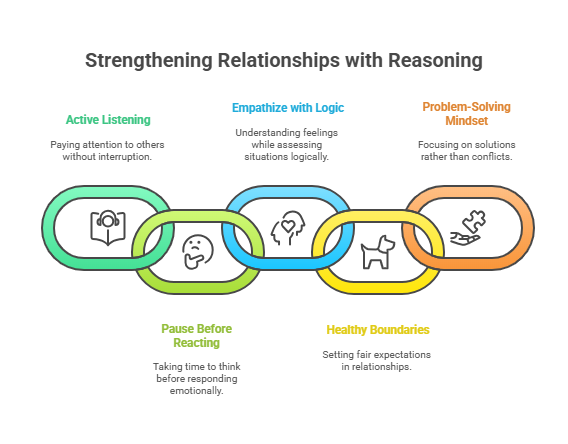
- Active Listening: Pay attention to what the other person says without interrupting.
- Pause Before Reacting: Give yourself time to think before responding in emotional situations.
- Empathize with Logic: Try to understand feelings but also assess situations logically.
- Healthy Boundaries: Use reasoning to set fair expectations in relationships.
- Problem-Solving Mindset: Look for solutions instead of dwelling on conflicts.
The Path to Balanced Living
Relationships and reasoning together help create a fulfilling life. Relationships add emotional depth, while reasoning ensures stability and fairness. Both are essential — one cannot thrive without the other. When we learn to balance heart and mind, emotions and logic, we create stronger connections and live with greater peace and harmony.
Conclusion
Relationships are the essence of life, and reasoning is the guide that helps us navigate them wisely. Alone, they are incomplete, but together they create a foundation for happiness, trust, and long-term satisfaction. Balancing compassion with logic ensures that our bonds are not only loving but also respectful and resilient. Ultimately, relationships and reasoning are not opposites — they are partners in building a life of meaning, balance, and inner growth.