What is Mental Wellbeing?
Mental well-being is the state of feeling balanced, positive, and emotionally strong in everyday life. It does not mean being happy all the time, but being able to manage stress, cope with challenges, and maintain a healthy mindset.
Importance of Mental Well-being
Good mental well-being is as important as physical health. When our mind is healthy, we can focus better, make confident decisions, and maintain meaningful relationships. On the other hand, poor mental health may lead to stress, anxiety, low self-esteem, and a lack of motivation.
Factors Affecting Mental Well-being
- Stress & Work Pressure: High workload or financial stress often impacts mental health.
- Lifestyle Choices: Lack of sleep, unhealthy diet, and minimal exercise reduce mental stability.
- Relationships: Supportive relationships boost positivity, while conflicts may cause emotional strain.
- Environment: A safe, encouraging, and peaceful environment helps in maintaining mental calmness.
How to Improve Mental Well-being
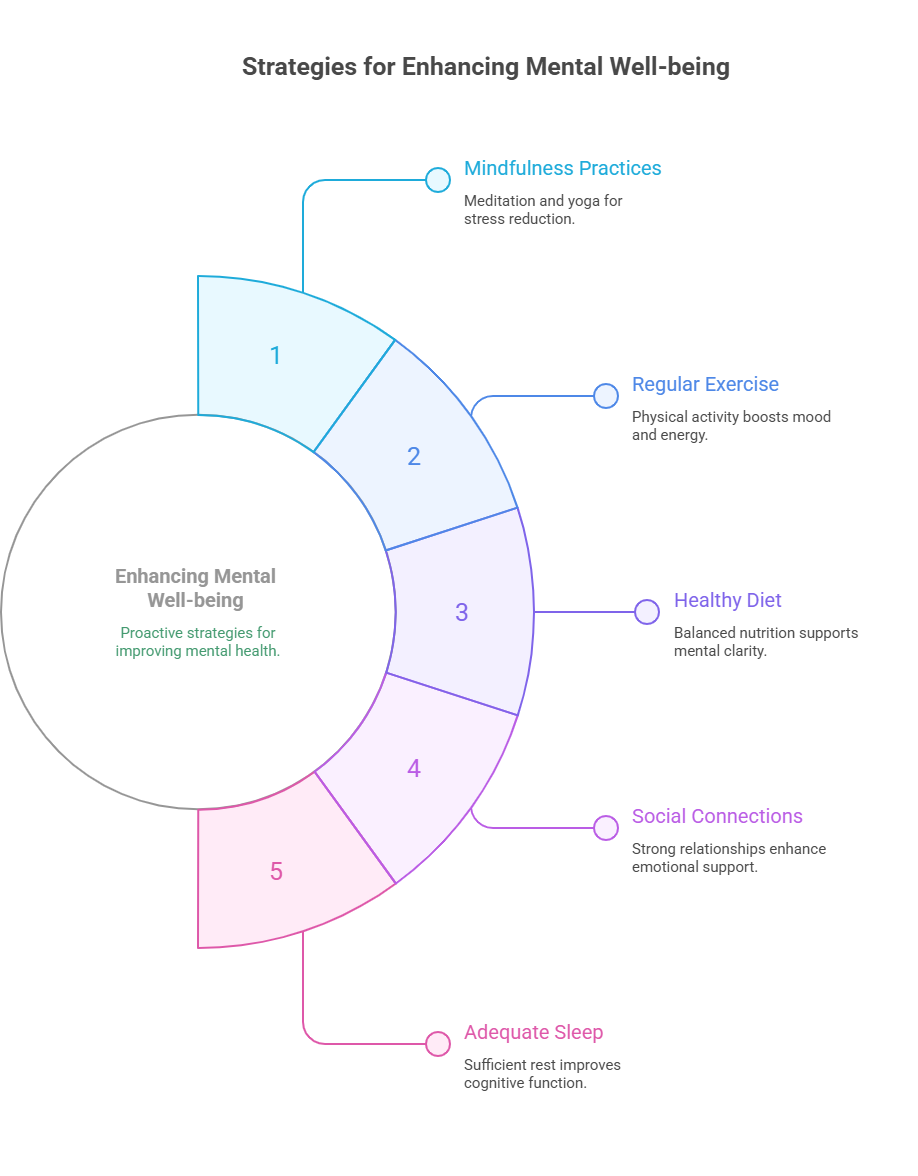
- Practice Mindfulness: Meditation, yoga, and breathing exercises reduce stress.
- Stay Physically Active: Regular exercise releases endorphins that uplift mood.
- Healthy Diet: Nutritious food supports brain and emotional health.
- Positive Social Connections: Talking and sharing with friends or family builds emotional strength.
- Seek Professional Help: Counseling or therapy provides guidance during tough times.
Benefits of Strong Mental Well-being
When mental well-being is nurtured, it leads to:
- Increased focus and productivity
- Better emotional balance
- Improved self-confidence
- Stronger relationships
- Greater resilience during challenges